In this webinar, we outlined how to build a robust operations and management strategy for AI data centers in a time where extreme power densities, liquid cooling complexity, and rapid hardware refresh cycles demanded a fundamentally different…
Internal efforts to maximize token use, combined with changes in LLM pricing structures, have rapidly increased enterprise AI spending. Yet there is often limited visibility into whether such expenditures are creating value.
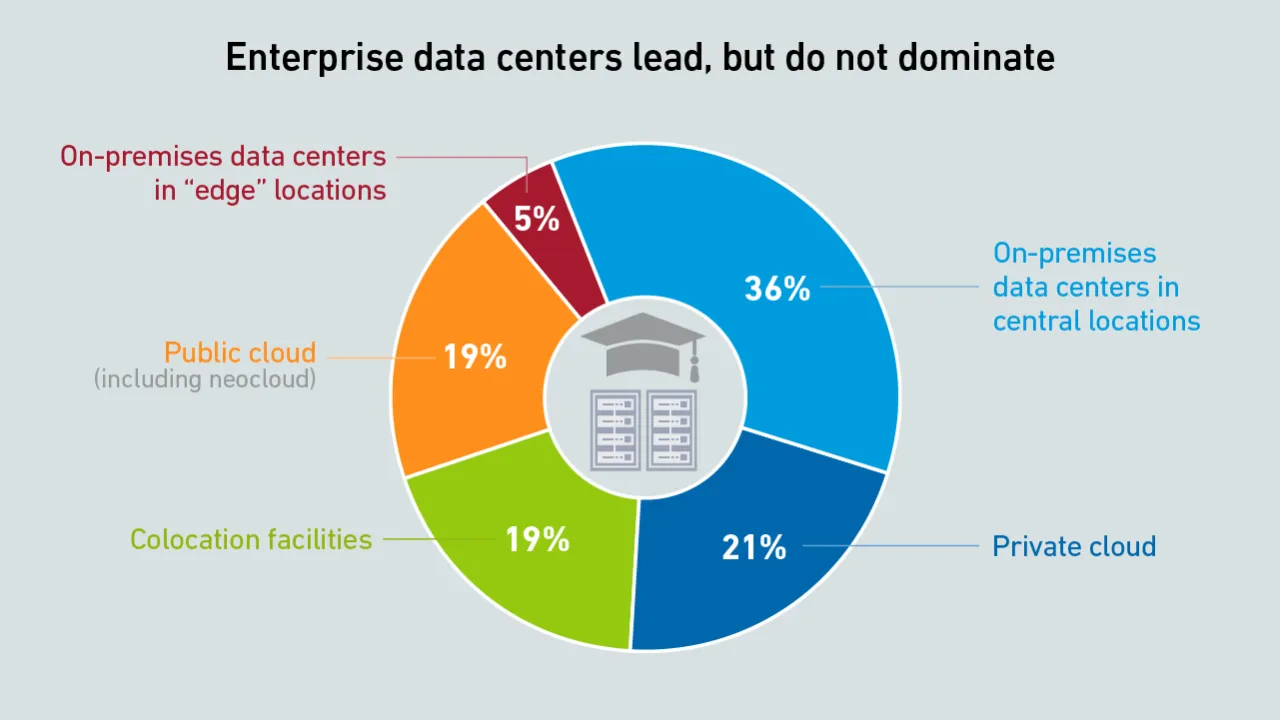
More data center operators are performing AI training in 2026, and this type of workload continues to be distributed across a wide range of data center venues. No single hosting model has emerged as the default.
This tool — to accompany the Uptime report "The problem with energy per token" — explores how energy and carbon per token vary depending on throughput, utilization, power consumption and grid carbon intensity, even when using the same hardware.
The cost of AI training depends on venue choice and infrastructure utilization. This costing tool — to accompany the Uptime report "Where to deploy AI training" — calculates workload infrastructure costs for colo, cloud and enterprise data centers.
Benchmarks may produce impressive energy-per-token metrics, but real-world AI workloads are bursty; when throughput drops and GPUs sit idle, joules per token can increase. Do not size AI infrastructure for lab conditions — plan for demand.
An alert from the North American grid connection authority shows that data centers will be treated similarly to generation assets when requesting power connections, requiring operators to share more information and permit operational monitoring.
The 16th edition of the Uptime Institute Global Data Center Survey highlights the experiences and strategies of data center owners and operators in the areas of resiliency, sustainability, efficiency, staffing, cloud and AI. The attached data files…
The cost of AI training varies depending on underlying infrastructure and the training approach adopted. This web tool calculates training times and workload infrastructure costs based on configurable data center, infrastructure and model attributes.
Choosing whether to train a model from scratch or fine-tune an existing one comes down to the use case and cost — with hardware utilization remaining an important cost factor.
Water treatment and chemicals giant Ecolab has agreed to pay $4.75 billion in cash for Canadian DLC specialist CoolIT. It is the latest sign of unabated demand for AI compute.
Enterprises deploying AI inference need to choose carefully to limit costs and protect their data.
Although cloud platforms often offer the lowest cost for AI inference, on-premises deployment may be preferable due to application architecture, data locality and control requirements.
The cost of AI inference varies widely depending on deployment model, utilization and hardware. This costing tool compares on-premises, colocation and managed AI platforms on a like-for-like basis.
Results from Uptime Institute's 2026 AI Infrastructure Survey (n=1,141) focus on the data center infrastructure currently used or being planned to use to host AI Training and AI Inference, as well as future industry outlooks on the usage of AI. The…