This report explains the nuances of using energy consumption, energy attribute certificates and emissions factor data to calculate the use of renewable energy and carbon-free energy, and a Scope 1 and 2 emissions inventory.
Jay is the Research Director of Sustainability at Uptime Institute. Dietrich looks beyond the hype to analyze the transformations required in energy and IT systems, data centers and software management systems, and intra-organizational collaboration, both within and between companies, to deliver sustainable data center operations.
jdietrich@uptimeinstitute.com
This report explains the nuances of using energy consumption, energy attribute certificates and emissions factor data to calculate the use of renewable energy and carbon-free energy, and a Scope 1 and 2 emissions inventory.
The final publication of the approved EED means that data center operators will need to undertake internal efforts to comply with energy management system and data reporting requirements.
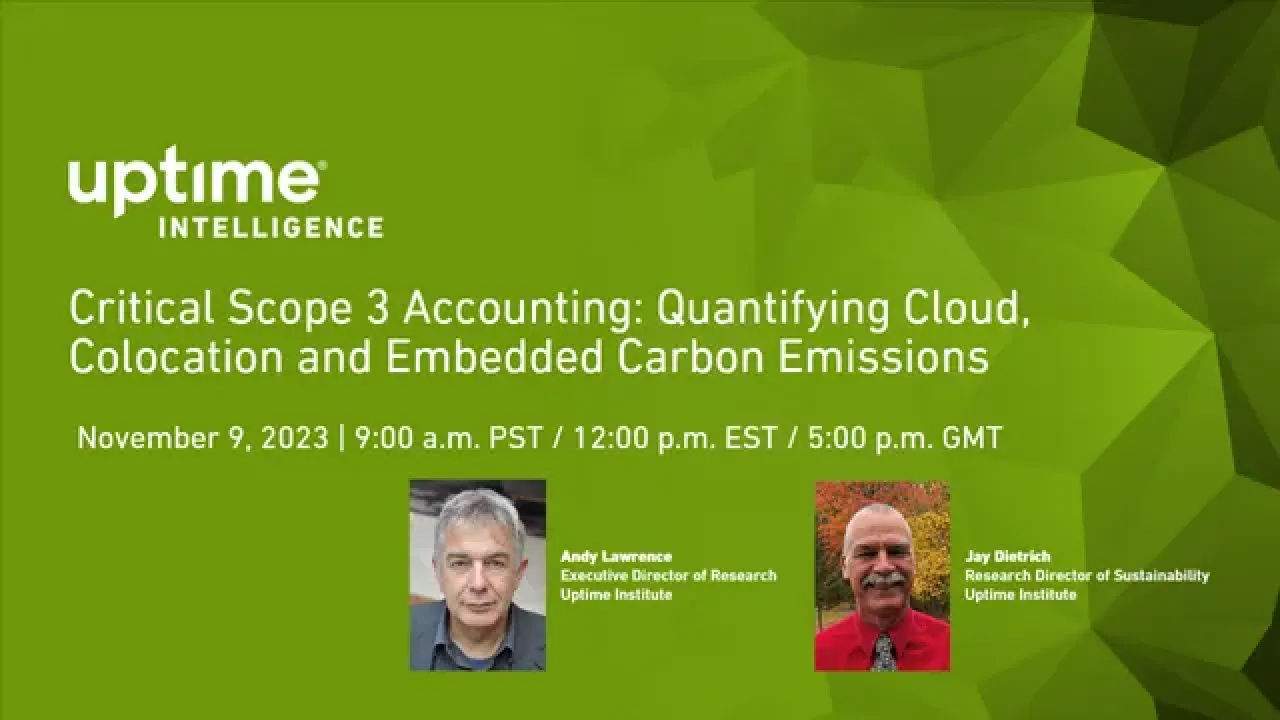
This session evaluates the methodologies to account for emissions from IT operations in cloud and colocation facilities and embedded carbon in IT equipment purchases, and discusses their management as part of a net zero program.
Over the next decade, digital infrastructure operations will need to comply with an emerging set of regulatory requirements. Managers can smooth the path to compliance by focusing on business processes and data collection.
This Q&A brings together questions and answers from a webinar on the transactions per megawatt hour metric. Topics include power management, server refresh and sustainability, GHG emissions, IT metrics and utilization rates.
This session covers common digital infrastructure sustainability myths, misunderstandings, and poorly understood areas, and provides advise on building better sustainability strategies.
Recent publication of the EU Energy Efficiency Directive Task B and C reports clarify most of the data reporting requirements and set out the preferred policy options for assessing data center energy performance.
IT efficiency can offer the keys to unlocking a more sustainable, efficient, and reliable data center. This session provides quantified examples of improvements in business and environmental performance.
This Q&A brings together questions and answers on the EU's Energy Efficiency Directive (EED) and its implications globally. Topics covered include reporting, efficiency, heat reuse, ISO standards, carbon capture and transparency.
Uptime Intelligence has been providing regular updates and insights on the efforts of the European Parliament and European Commission (EC) to finalize the Energy Efficiency Directive (EED) recast requirements. The directive is the most radical and…
The European Union Parliament and commission have agreed on the final Energy Efficiency Directive (EED) data center requirements. What does this mean for operators with a presence in the EU and what does it foretell for global data center regulation?
Digital infrastructure operators have started to refocus their sustainability objectives on 100% 24x7 carbon-free energy (CFE) consumption: using carbon-free energy for every hour of operation. To establish a 24x7 CFE strategy, operators must track…
Data center operators that set net-zero goals will ultimately have to transition to 100% 24x7 carbon-free energy. But current technological limitations mean it is not economically feasible in most grid regions.In the past decade, the digital…
To help address the growing scrutiny of digital infrastructure efficiency, this webinar explores some of the options available to communicate IT system efficiency and work delivered per unit of energy consumed.
This Q&A brings together contributor/member questions and expert answers from a series of Uptime webinars held on the topic of sustainability and regulations and reporting in 2022.