Nvidia CEO Jensen Huang’s comment that liquid-cooled AI racks will need no chillers created some turbulence — however, the concept of a chiller-free data center is an old one and is unlikely to suit most operators.
European national grid operators are advised to adopt proposed grid code requirements to protect their infrastructure from risks, such as data center activity, even though Commission action on the issue has stalled.
Cloud sovereignty is often treated as binary choice, but, in reality, it is a spectrum shaped by law, operations, technologies and supply chains. This framework explains the differences between sovereign public cloud options.
DLC introduces challenges at all levels of data center commissioning. Some end users accept CDUs without factory witness testing — a significant departure from the conventional commissioning script
Cybercriminals increasingly target supply chains as entry points for coordinated attacks; however, many vulnerabilities have been overlooked by operators and persist, despite their growing risk and severity.
Uptime Intelligence looks beyond the more obvious trends of 2026 and examines some of the latest developments and challenges shaping the data center industry.
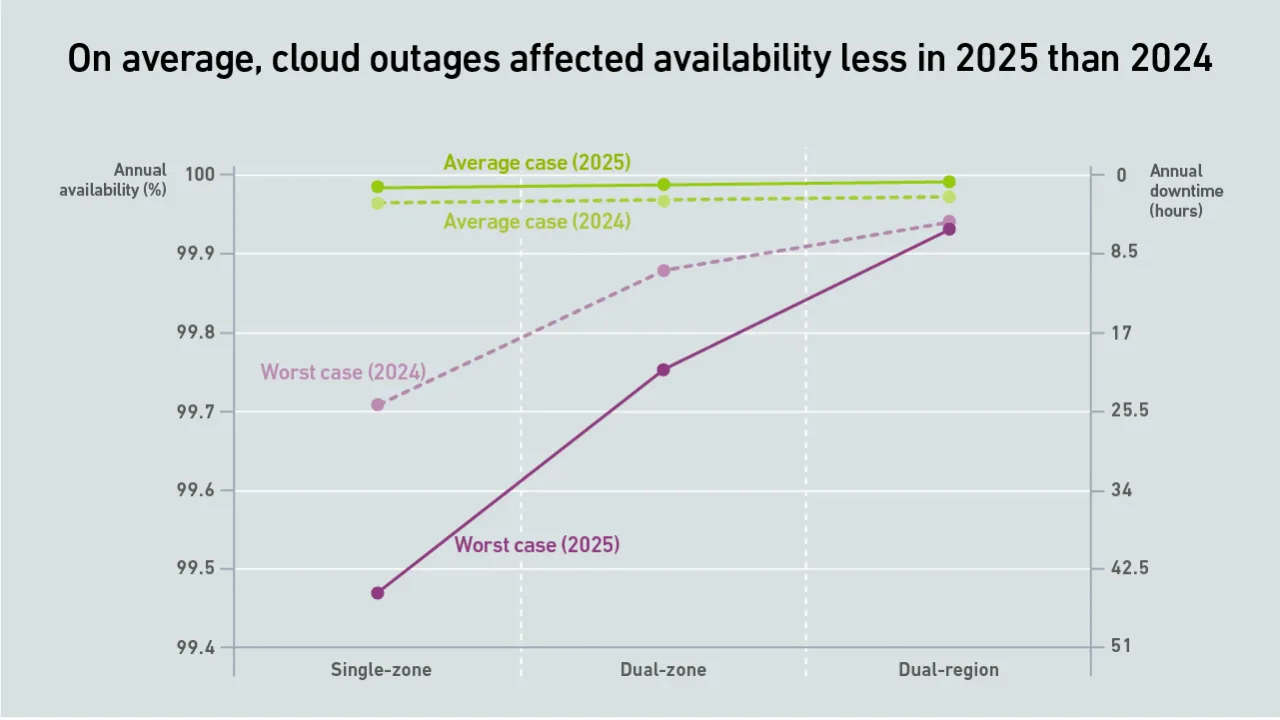
The Azure outage highlights a blind spot in resiliency planning. It is not only cloud compute that can fail - shared global network services such as DNS and CDNs can disrupt access to systems anywhere, including on-premises.
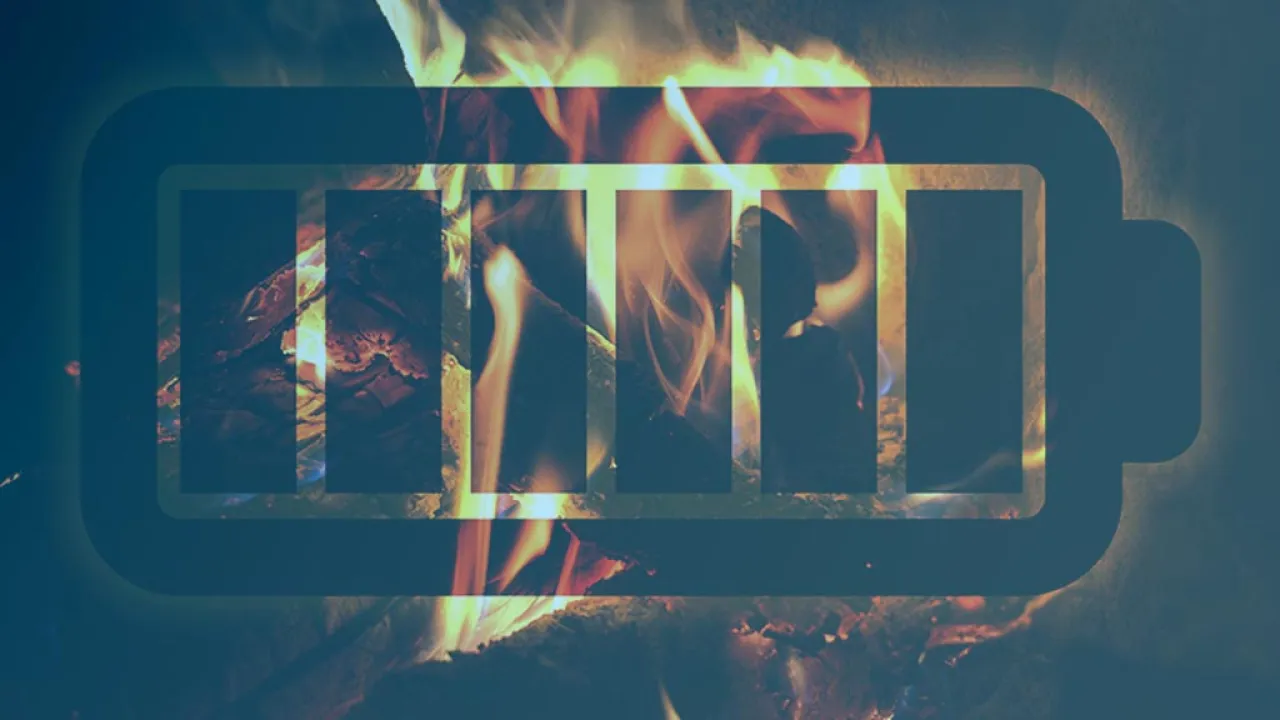
A fire in South Korea's government data center shows how a misjudged safety fix and a lithium-ion battery can spark a national outage, proving that battery chemistry, placement, and procedures are central to resilience.
A major outage at AWS's Virginia region took many global organizations offline. What can enterprises do to reduce or negate the impact of such widespread outages?
Many data center OT systems share High- or Critical-level common vulnerabilities and exposures (CVEs), making them easy targets for cyberattackers. Operators need to act to protect their critical infrastructures.
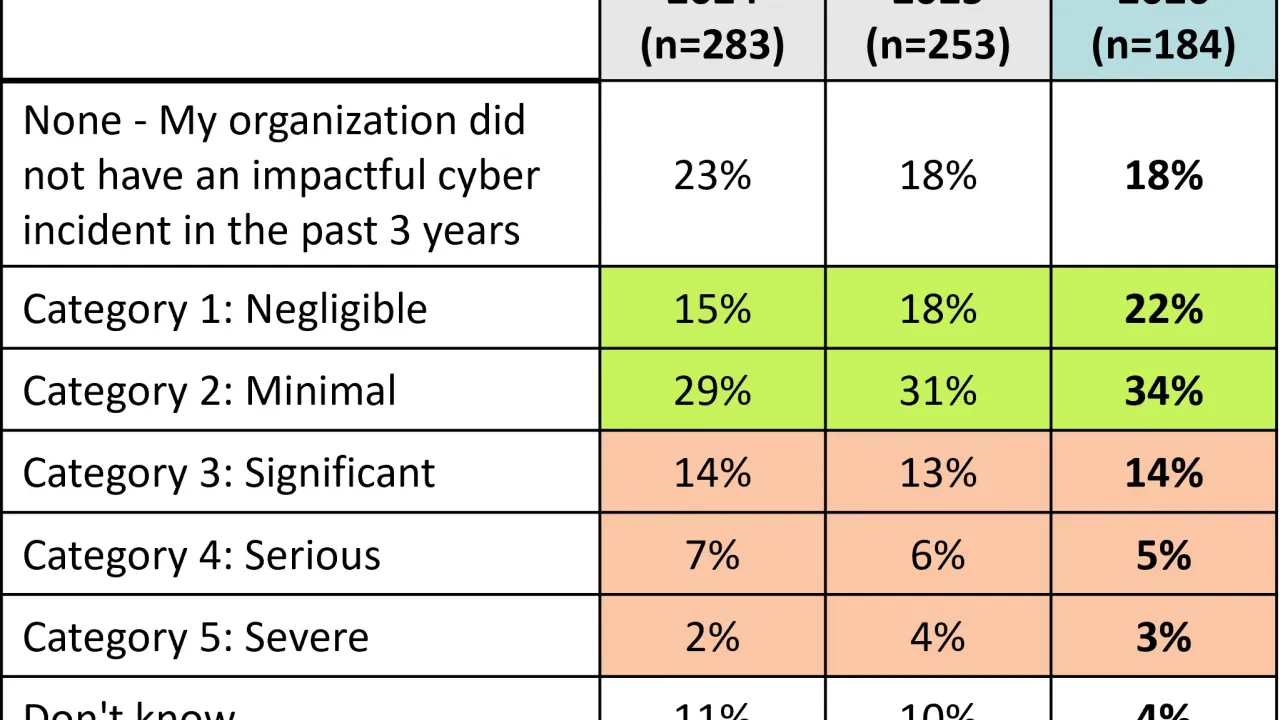
Cybersecurity issues remain a major threat to the industry. This report highlights findings from the Uptime Institute Data Center Security Survey 2025, including costs and the persistence of IT software and network configuration issues.
Many operators report that they trust AI to draft their MOPs, EOPs and SOPs. But this potentially error-prone approach demands meticulous review by an appropriate member of staff, or operators risk increasing the likelihood of costly downtime.
Most operators do not trust AI-based systems to control equipment in the data center - this has implications for software products that are already available, as well as those in development.
Security vulnerabilities in data center infrastructure management (DCIM) software are leaving some operators at risk of cyberattacks.
Results from Uptime Institute's 2025 Security Survey (n=982), now in its 3rd year, explore major cybersecurity issues facing data centers, as well as the IT and OT systems used to operate critical infrastructure.The attached data files below provide…