Access to the latest hardware and rapid speed of deployment make public cloud attractive; yet today most training workloads run on-premises.
AI data centers are racing ahead, but the grid isn't keeping up: operators need to rethink how they connect to, generate and manage energy to unlock expansion without overwhelming already strained generation and transmission systems.
When choosing whether to develop a brand new LLM or fine-tune an existing one, the second option often makes more sense. It can be more cost-effective and requires fewer IT and facility resources.
Increasing community opposition to data center development is compelling hyperscalers to rethink their decades-old practices.
Enterprises deploying AI inference need to choose carefully to limit costs and protect their data.
Concerns over rising electricity costs and environmental impact are driving local opposition to new data center projects in the US, prompting a growing number of cancellations.
Elon Musk's merger of his SpaceX aerospace company with his AI firm xAI has relit the thrusters under the concept of building big data centers in space. However, the technical difficulties involved may ultimately thwart his ambitions.
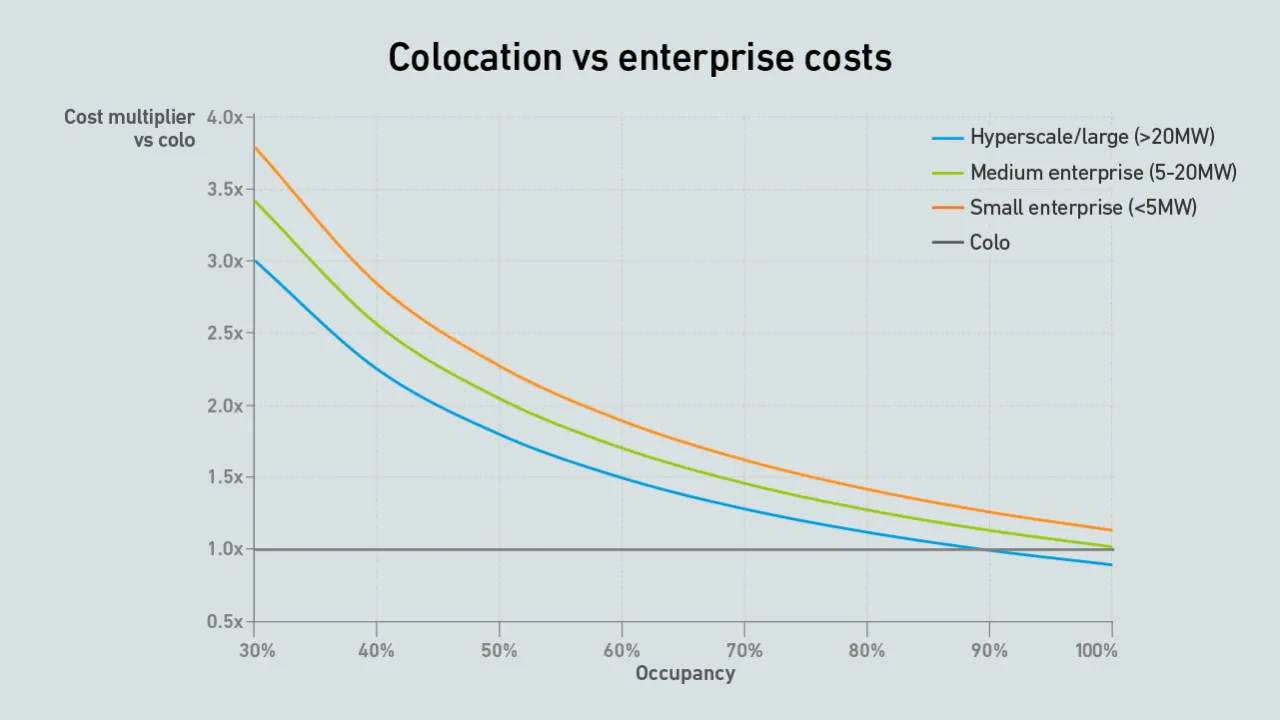
Simple arithmetic shows that newly constructed, large-scale private data centers with high occupancy rates can sometimes undercut colos on unit costs, but in most cases colos remain significantly cheaper.
Nvidia's DGX-Ready certification for colocation facilities has been around for nearly six years, yet what the program actually entails remains obscure.
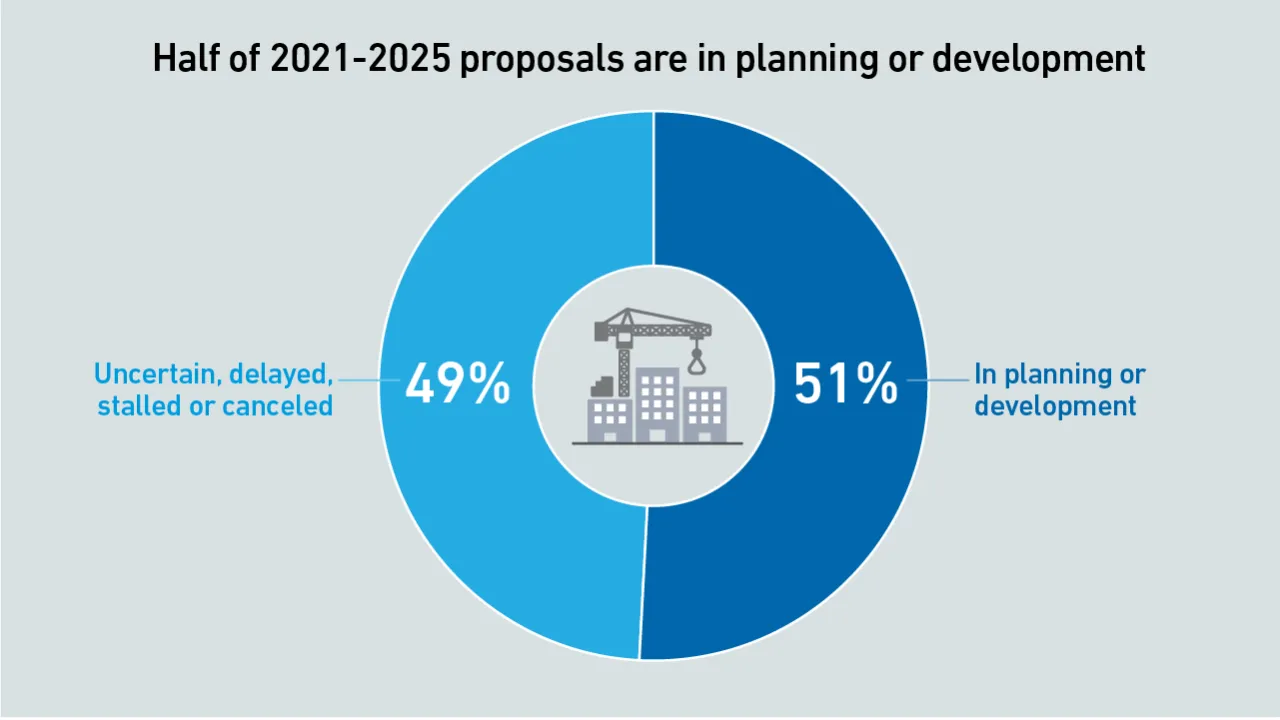
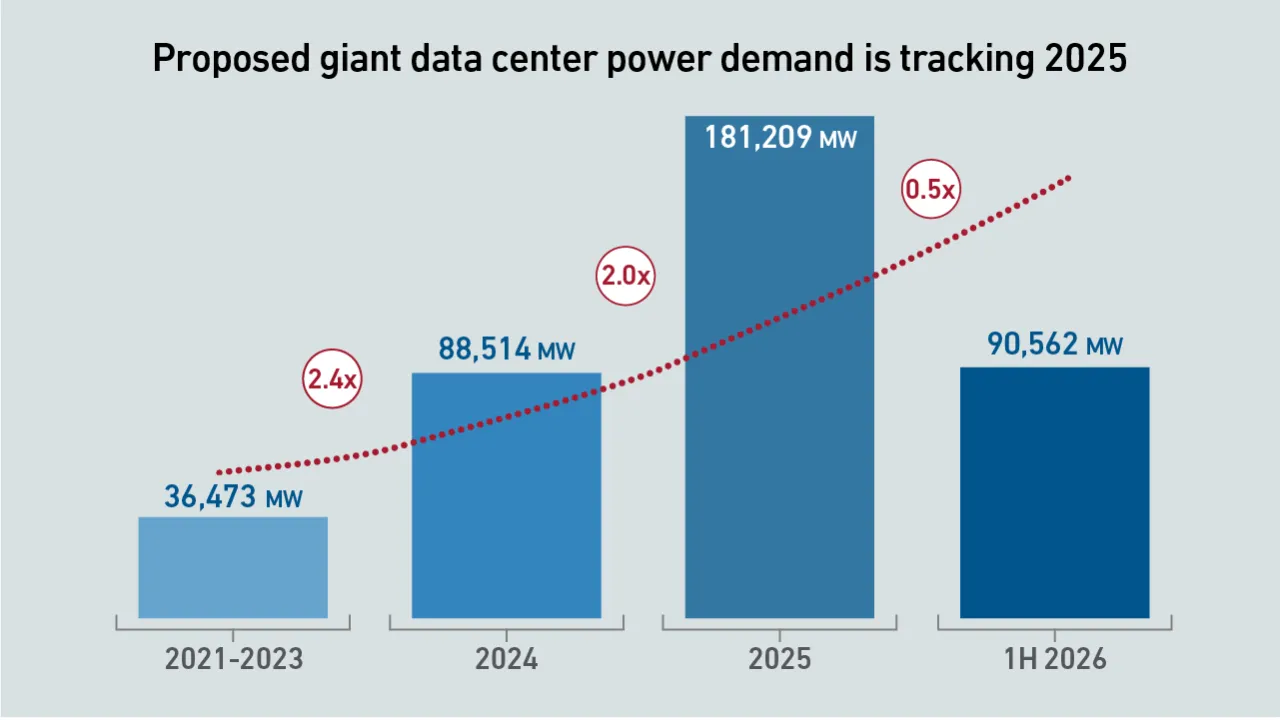
Giant data centers are being planned and built across the world to support AI, with successful projects forming the backbone of a huge expansion in capacity. But many are also uncertain, indicating risks and persistent headwinds.
Uptime Institute's 2025 Service Providers and Capacity Survey (n=872) benchmarks the industry in the areas of public cloud, capacity in owned data centers, and capacity in colocation facilities.The attached data files below provide full results of…
Financial data suggests that hyperscalers' use of colocation facilities has grown substantially over the past few years. Their investments in colocations also show no signs of slowing down.
AWS has recently cut prices on a range of GPU-backed instances. These price reductions make it harder to justify an investment in dedicated AI infrastructure.
The terms "retail" and "wholesale" colocation not only describe different types of colocation customers, but also how providers price and package their products, and the extent to which customers can specify their requirements.
Although the share of processing handled by the corporate or enterprise sector has declined over the years, it has never disappeared. But there are signs that it may reclaim a more central role.