UII UPDATE 538 | OCTOBER 2026
Intelligence Update
Noise: a real, but solvable, problem
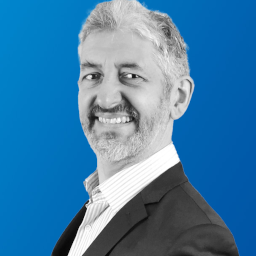
Steven Goodman, Marquette University, Data center infrastructure: a decision reference on cooling, noise, aesthetics, power, and sustainability — chapter 2: data center noise
Data center noise has long been a major complaint about proposed and existing facilities, but it has been cited more often in 2026, driven by fears of illness caused by low-frequency sound (20-250 Hz) and "infrasound" — sound waves that are below 20 Hz.
Noise is often regulated by local ordinances, but these contain few provisions on low-frequency noise. The idea that infrasound is harmful, which has been used by fossil fuel interests to discredit wind turbines, remains unproven but has become a contentious issue for data centers:
- A YouTube video posted by audio engineer and researcher Benn Jordan, viewed by 1.8 million people, claimed that some data centers are acting as "acoustic weapons" and harming people with infrasound. The idea was picked up by both data center opposition groups and the media.
- Pro-data center blogger Andy Masley dismissed Jordan's video as pseudoscience in a blog post, calling it a "bizarre folk theory" and disputing each of its claims at length. Other industry experts have made similar statements.
This public discussion, however, does not help the data center industry address the backlash. Data centers generate noise, much of it at low frequencies; authorities regulate that noise through permits; and the public increasingly distrusts the results of this process.
Steven Goodman, an engineer and senior director of technology at Marquette University in Wisconsin, offers a more constructive approach. His open-access book, Data center infrastructure: a decision reference, includes a useful chapter on noise alongside those on cooling, aesthetics, power and sustainability.
The chapter brings together standards, case law, medical literature and ordinances in one place. It is aimed at three audiences: policymakers revising ordinances, communities evaluating a proposed facility, and developers designing a facility that fits the location and does not create community hostility. Such hostility could require noise-reduction measures that are much more costly to implement after construction of the data center.
Goodman finds that the jury is still out on the harmful effects of infrasound — which, at the lower limit of human hearing, may be experienced as physical sensations. However, he also finds that data centers are already prolific producers of low-frequency noise, which is annoying and very likely harmful but can slip through regulations due to outdated noise ordinances.
The ways to measure noise
Data centers are not designed to be noisy. They are designed to comply with noise ordinances written for traffic, construction and loud parties. These ordinances set fixed limits that cannot be adjusted for specific projects and use A-weighted decibels (dBA) — a scale that does not capture the low-frequency (20-250 Hz) sounds generated by data center power and cooling systems.
The dBA scale, used in almost all ordinances, focuses on the sounds most readily perceived by the human ear at moderate levels. It uses a filter that discounts lower frequencies, attenuating infrasound below 20 Hz by more than 40 dB and noise at 63 Hz by 26 dB compared with noise at 1 kHz. The result is that low-frequency sounds are often downplayed. In addition, continuous tones are more annoying to the human ear than broadband noise, but they can be lost in a dBA figure that aggregates noise from across the spectrum.
Alternatives include the C-weighted (dBC) filter, which preserves more low-frequency noise, and Z-weighting (dBZ), which applies no frequency correction and allows octave-band analysis to pick out tonal noise that is lost in an aggregate figure.
Most data center equipment produces low-frequency tones. Examples include:
- Fan blades in CRAC units, CRAH units and cooling towers emit noise below 250 Hz that can be audible at property lines, even at facilities complying with dBA-based ordinances.
- Transformers hum at 120 Hz and at other harmonics of the mains frequency (60 Hz).
- Diesel generators are the loudest sources of noise on campus (85-100 dBA at the source), but they are also the most intermittent because their use is limited to scheduled tests and unplanned outages.
Time-based analysis can detect intermittent noise that might otherwise go unnoticed, while standards such as ANSI/ASA S12.9 and ISO/TS 20065 can be used to set tonal penalties. Yet most ordinances do not adequately account for data center noise.
Research is inconclusive
In his book, Goodman reviews existing research on the effects of low-frequency noise and infrasound, noting that low-frequency noise penetrates buildings more deeply than higher frequencies. Adverse health effects have been identified, but applying research on wind turbines and industrial machinery to data centers requires considerable care, and epidemiological research does not translate into specific recommendations for data center noise.
There is consistent evidence that noise in the specific 20-200 Hz range produced by data center chillers, fans and transformers can cause sleep disturbance, annoyance and loss of concentration. Broader research suggests that noise can activate stress hormones, raise blood pressure and increase long-term cardiovascular risk.
Research on infrasound (below 20 Hz) is less conclusive. There is a plausible mechanism by which infrasound pressure waves could affect the body. However, although one review (Natural Hazards, 2013) found that exposure to infrasound at 50 dB correlated with reports of adverse effects, a 2021 study found no statistically significant adverse effects from 6 Hz sources at 80-90 dB placed in participants' bedrooms for 28 days.
In its Guidelines for community noise (1999), the World Health Organization recommends evening and nighttime limits for low-frequency noise of 5-10 dB below ambient nighttime levels. It also recommends conducting a full frequency analysis if dBC and dBA readings differ significantly.
How to mitigate noise
There are three ways to reduce noise: make the source quieter, block or reduce sound transmission, or shield the listener. In a data center, this means choosing quieter equipment, limiting noise transmission, and planning the site carefully.
Quieter equipment includes variable-speed fans, aerodynamically designed low-noise fan blades, and newer compressor designs. Other approaches, such as immersion cooling, may eliminate some fans and simplify the overall cooling infrastructure. However, immersion cooling is currently a niche solution and is not driven by noise considerations.
Acoustic enclosures can muffle noisy equipment such as chillers and air handlers, while baffles can be used for generators. Computational fluid dynamics can confirm whether these measures provide sufficient airflow under load. Transformers and compressors transmit noise through the building structure; rubber mounts and flexible pipes can isolate them.
Active noise cancellation systems use microphones and speakers to cancel sound with an anti-phase waveform. The technique is well established in headsets, but systems for large-scale open environments are more complex and may include arrays of speakers in a multiple-input multiple-output (MIMO) configuration. Early implementations are showing success, and Goodman recommends that data center operators consider using the technology to limit steady transformer hum.
The cheapest option is to ensure that listeners are kept at a distance from the source through careful siting and the use of vegetation buffers, although deciduous trees will not work well in winter. Goodman strongly recommends careful noise modeling, including tonal analysis, during the design stage. The resulting model can then be used to select and site equipment, and to support negotiations with authorities and the community.
Regulations are changing
Comparing ordinances across five US locations, Goodman concludes that the most robust approaches are moving away from models that set a single dBA limit. He recommends:
- A dBA ceiling with a dBC or octave-band check.
- Tonal penalties based on ANSI S12.9 or ISO/TS 20065 standards.
- Procedural requirements for pre-construction modeling and post-construction verification, rather than complaint-driven enforcement.
No jurisdiction has yet adopted all three elements.
The book compares two jurisdictions:
- Loudoun County, Virginia, applies a 55 dBA limit at property lines and regularly receives complaints about low-frequency droning and vibrations. Residents report sealing windows and using earplugs to combat sleep disruption and other health problems. The complaints focus on a small number of facilities; one of them, Vantage Ashburn II, has generated more complaints than any other despite complying with the noise ordinances. Goodman is in dialog with Loudoun officials, who are exploring new requirements to address tonal hums.
- Chandler, Arizona, does not set a single fixed decibel ceiling. Instead, it requires a third-party pre-approval sound study to establish a site-specific noise baseline and share it with residents. If approved, the facility must stay at or below the baseline and pass annual checks during its first five years of operation.
Goodman says Chandler no longer requires data center operators to remain below a limit chosen decades ago for a different kind of noise. Instead, it asks them to make a promise to a specific neighborhood and then keep it. The idea is catching on in other cities in Arizona.
Best practice
For developers and municipalities, Goodman suggests six elements of best practice:
- Measure noise levels from the outset and share the baseline with affected residents before approval.
- Select equipment based on its acoustic signature, not just its thermal performance.
- Treat tonal transformer noise as a specific design problem.
- Set an internal target below the legal minimum, ensuring that noise at the nearest residence is 10 dB below the existing ambient noise level.
- Commit to annual verification for several years after construction.
- Update outdated ordinance language to reflect current acoustic conditions.
Outlook
Data center noise is fundamentally a solvable problem. The technology is available, along with the modeling tools, engineering practices and regulatory frameworks needed to prevent most conflicts. What is missing, Goodman says, is alignment between ordinance language, acoustic science, and facility design practices.
As data centers expand into residential areas, Goodman predicts that tonal penalties and dBC analysis will become standard in new and revised zoning codes, while pre-construction modeling and long-term monitoring will spread to more jurisdictions. Noise cancellation, still an emerging idea, may become more widely used.
About the Author

Peter Judge
Peter is a Senior Research Analyst at Uptime Intelligence. His expertise includes sustainability, energy efficiency, power and cooling in data centers. He has been a technology journalist for 30 years and has specialized in data centers for the past 10 years.
pjudge@uptimeinstitute.com