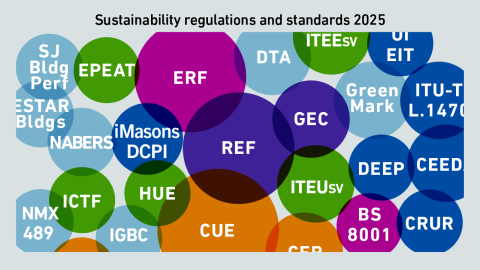
As US state legislatures face difficulties passing local bans on data centers, opponents are increasingly turning to new regulatory approaches. Data center operators will need to navigate this fragmented policy landscape to stay ahead of compliance.
The 16th edition of the Uptime Institute Global Data Center Survey highlights the experiences and strategies of data center owners and operators in the areas of resiliency, sustainability, efficiency, staffing, cloud and AI. The attached data files…
Cooling systems with similar energy performance can vary significantly in water consumption. An analysis of facility data confirms that evaporative cooling's efficiency advantage may be limited and dependent on unacceptable levels of water use.
The European Commission has published the draft Energy efficiency — rating scheme for data centres in Europe, proposing amendments to Delegated Regulation (EU) 2024/1364, with comments due by April 23, 2026.The proposed rating scheme introduces a…
The European Commission published the draft data center rating scheme, including a public label template, and amendments to EU 2024/1364. The regulation has been improved, but critical issues remain unaddressed.
PUE measures facility energy overhead relative to IT load, but it does not show how much of a site's provisioned power envelope ultimately reaches IT. Power and compute effectiveness (PCE) introduces a metric that makes this allocation visible.
Some countries are attempting to create capacity headroom for new facilities by applying efficiency limits to existing data centers. In Singapore, reducing PUE will be expensive for operators.
Net-zero commitments are becoming more common across the data center industry, but power demand growth and stricter carbon accounting rules are reshaping expectations.
Cloud and AI growth are straining power systems, and the US GRID Act could make expansion more difficult. The industry will need greater transparency on projected energy and water use, project plans, and incentives.
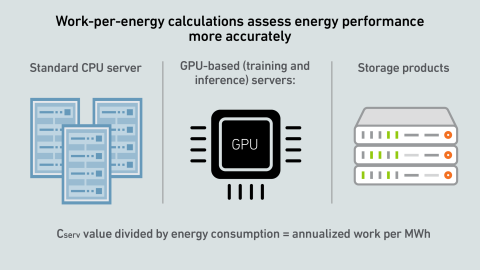
Uptime Intelligence analysis shows that minimum thresholds for IT power utilization misrepresents server work capacity utilization. These thresholds can unintentionally incentivize operators to disable server energy efficiency features.
Operators are proposing behind-the-meter power systems to accelerate the buildout of new AI data center infrastructure. Executing this strategy requires regulatory changes in many jurisdictions and new data center design approaches.
French data center operators must meet strict PUE and WUE targets from early 2027 to maintain their electricity tax benefits.
Surging demand for AI data centers is driving a shift to on-site natural gas power, even though operators admit this will delay the achievement of net-zero goals.
Ireland has issued new conditions for large grid loads and proposed new codes for data center connections; similar measures are expected to follow in other locations.
Microsoft and other major campus operators are increasing transparency on new projects and committing to absorb their full development costs, but further commitments are needed to fully address public concerns.