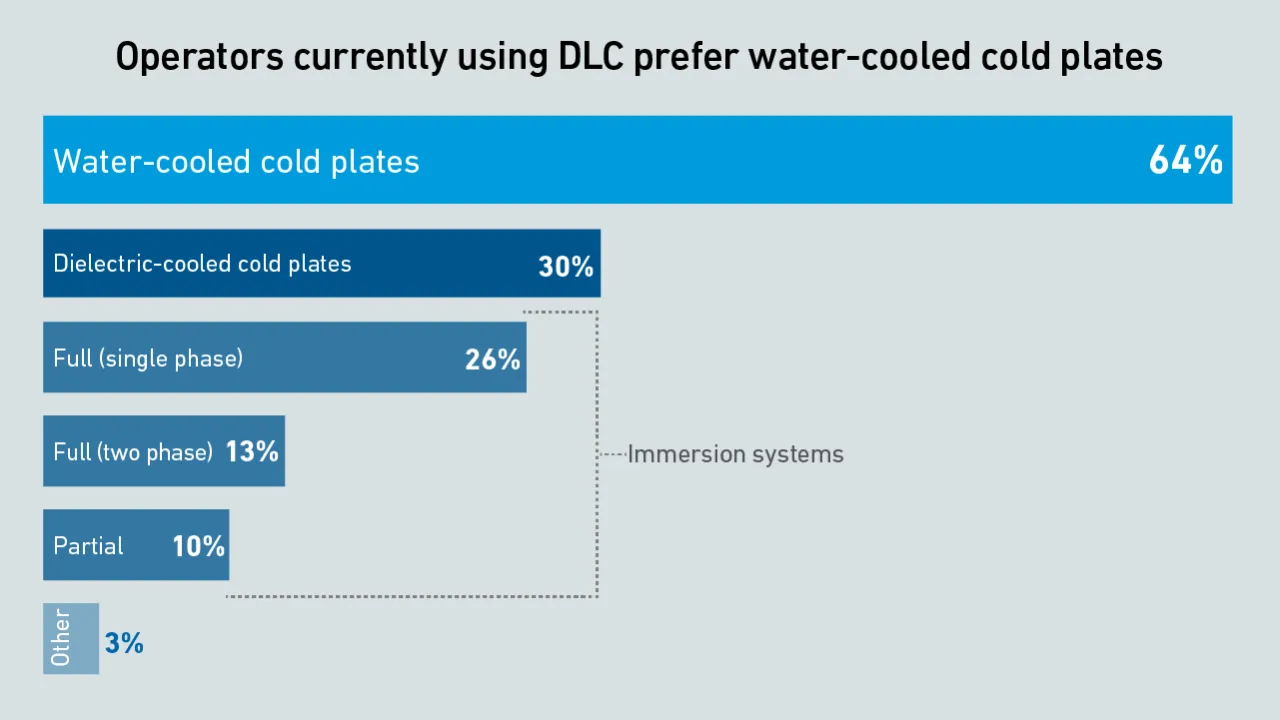
The transition to direct liquid cooling has been a slow process. Today, operators work with water cold plates more than any other type of cooling, but this might change once a wider range of DLC types become available.
Jacqueline is a Research Analyst at Uptime Institute covering global trends and technologies that underpin critical digital infrastructure. Her background includes environmental monitoring and data interpretation in the environmental compliance and health and safety fields.
jdavis@uptimeinstitute.com
The transition to direct liquid cooling has been a slow process. Today, operators work with water cold plates more than any other type of cooling, but this might change once a wider range of DLC types become available.
The 14th edition of the Uptime Institute Global Data Center Survey highlights the experiences and strategies of data center owners and operators in the areas of resiliency, sustainability, efficiency, staffing, cloud and AI.
Alongside continued developments in liquid cooling, there are reports of air-cooled data centers that achieve standout levels of efficiency. Uptime explores the factors that combine to enable exceptional efficiency in air cooling.
Underwater data centers promise to be both economical and sustainable. The prerequisite densification of infrastructure and unmanned operations may only suit specific workloads, but lessons learned under water may influence land facilities.
Refrigeration's history of progress is also a history of environmental concern. Whenever new refrigerants solve a problem, they create further crises down the line - and now history appears to be repeating itself.
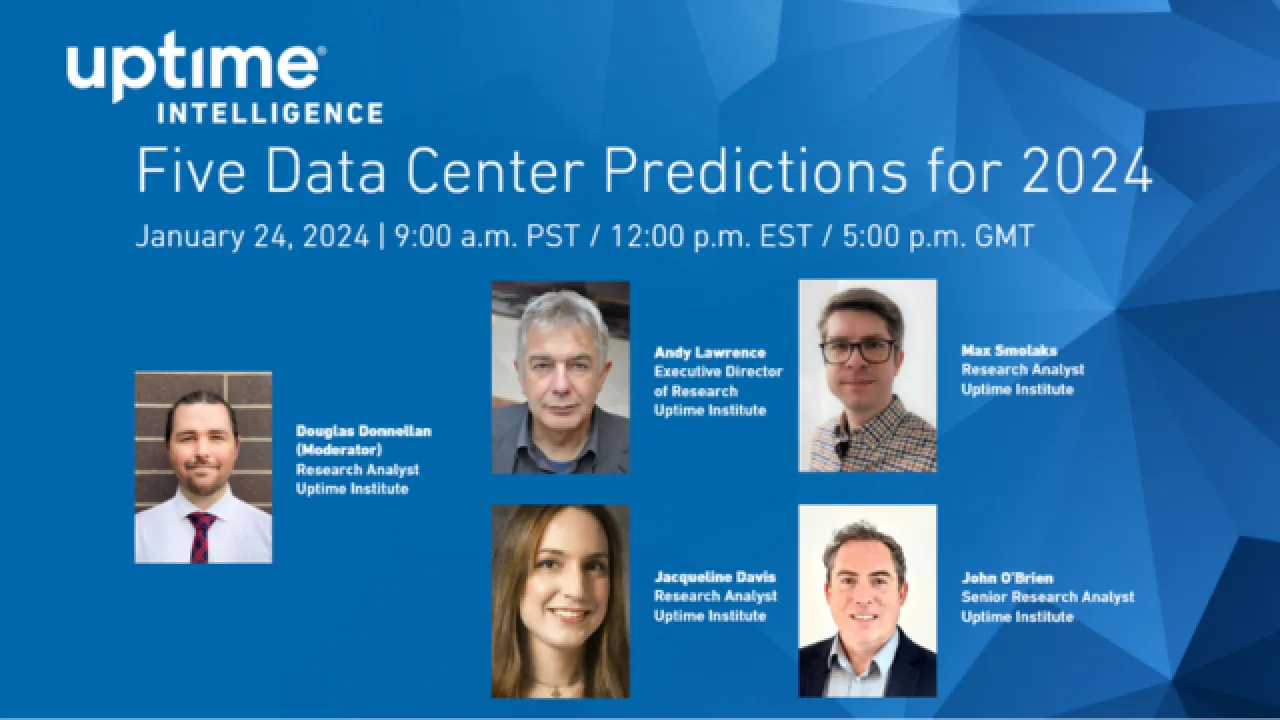
In this Webinar, the Uptime Intelligence team looks beyond the obvious trends of 2024 and identifies some of the latest developments and their associated limitations.
Uptime Intelligence looks beyond the more obvious trends of 2024 and identifies some challenging issues. Strong IT demand, high-density IT systems and tough sustainability requirements will drive a new wave of investment.
As operators deploy cold plate and immersion cooling, the cost or operational efficiency benefits are bound to disappoint. DLC alone will not bring the breakthrough in energy or sustainability performance the industry needs.
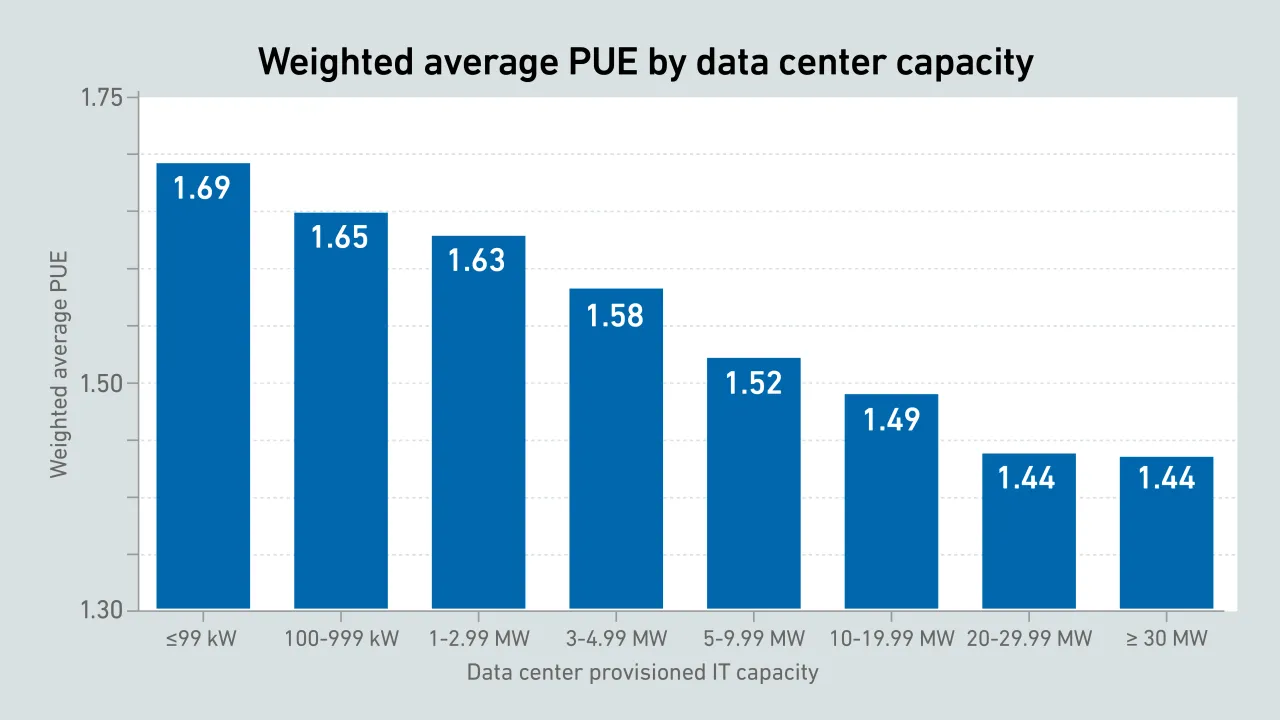
New survey data allows Uptime Institute to look at industry power usage effectiveness (PUE) in finer detail. Comparing PUE by compute capacity shows that, on average, larger sites have lower PUEs.
DLC promises attractive thermal performance and economics, but data center operators looking to adopt it will need to examine how they define and uphold their resiliency standard as product designs and resiliency guidance evolve.
Two persistent trends in data center staffing are in apparent tension. The 2023 Uptime Institute Global Data Center Survey confirmed, once again, that operations teams are struggling to attract and retain qualified staff. The severity of this…
The data center industry's largest and most influential survey results are in! Join us as we discuss the 13th Annual Uptime Global Data Center Survey 2023 which reveals an industry that is growing, dynamic and increasingly resilient.
The Uptime Institute Global Data Center Survey highlights the experiences and strategies of data center owners and operators in areas of resiliency, sustainability, efficiency, staffing, cloud and innovative technologies.
The Uptime Institute Cooling Systems Survey 2023 collects data on experiences with Direct Liquid Cooling from data center operators, as well as their objectives and concerns.
Precision time systems to synchronize IT system clocks over the network have proliferated and evolved to meet the needs of reliable, secure applications.