On March 12, 2020, Uptime Institute held its second roundtable about the impact of the COVID-19 virus on data center operations and potential responses to its spread. A Note covering the topics discussed in the first roundtable is available here…


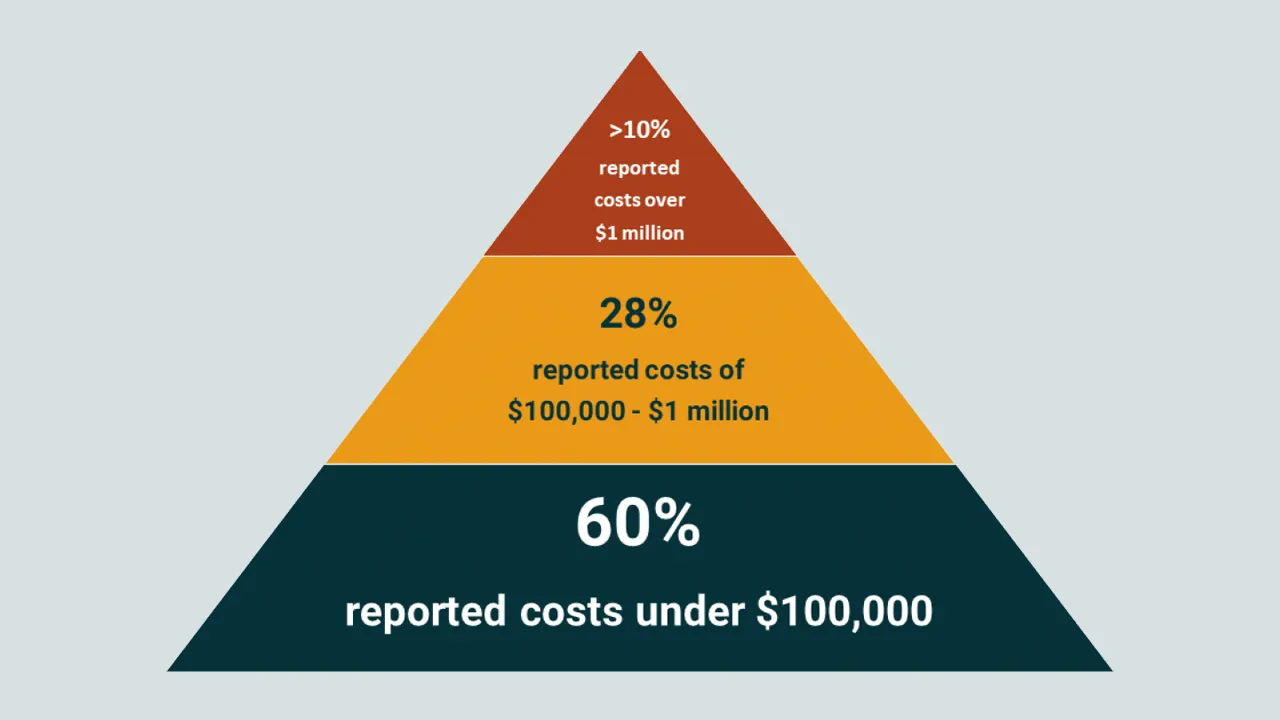
One of the findings of Uptime Institute’s recently published report Annual outage analysis 2020 is that the most serious categories of outages — those that cause a significant disruption in services — are becoming more severe and more costly. This…
Despite years of discussion, warnings and strict regulations in some countries, hot work remains a contentious issue in the data center industry. Hot work is the practice of working on energized electrical circuits (voltage limits differ regionally)…
What are the main causes of outages? Which industries suffer most? Why? What is the impact? Uptime Institute presents and analyzes annualized outage data for 2016-2019, pinpointing trends, causes and impacts.
Big IT outages are occurring with growing regularity, many with severe consequences. Executives, industry authorities and governments alike are responding with more rules, calls for more transparency and a more formal approach to end-to-end,…
In her book “Surveillance Capitalism,” Harvard scholar Shoshana Zuboff describes how some software and service providers have been collecting vast amounts of data, with the goal of tracking, anticipating, shaping and even controlling the behavior of…
The full report Ten data center industry trends in 2020 is available to Uptime Intelligence subscribers here.
In 2012, Microsoft announced that it planned to eliminate engine generators at its big data center campus in Quincy, Washington. Six years later the same group, with much the same aspirations, filed for permission to install 72 diesel generators,…
Separating production and nonproduction assets should be an operational requirement for most organizations. By definition, production assets support high-priority IT loads — servers that are critical to a business or business unit. In most…
One of the most widely cited metrics in the IT industry is for availability, expressed in the form of a number of nines: three nines for 99.9% availability (minutes of downtime per year), extending to six nines — 99.9999% — or even, very rarely,…
In the movie “Mary Poppins,” Mr. Banks sings that a British bank must be run with precision, and that “Tradition, discipline and rules must be the tools.” Otherwise, he warns, “Disorder! Chaos!” will ensue. One rule, introduced by the UK Financial…
A previous Uptime Intelligence Note suggested that avoiding data center outages might be as simple as trying harder. The Note suggested that management failures are the main reason that enterprises continue to experience downtime incidents, even in…
Why do some industries and organizations suffer more serious, high profile outages than others?In a recent Uptime Intelligence Note, we considered a June 2019 report issued by the US General Accounting Office (GAO) on the IT resiliency of US…
Maintaining and training staff on comprehensive, up-to-date procedures is a proven best way of reducing the likelihood of an outage and is key to restoring operations quickly afterward. This report examines the impact of outages and the relationship…
According to many IT professionals, a very high percentage of data center failures are caused by human error. Some report numbers as high as 75%, but Uptime Institute generally reports about 70%. That assumption immediately raises an important…